Red Bird of Paradise — Papua’s Crimson Crown Jewel
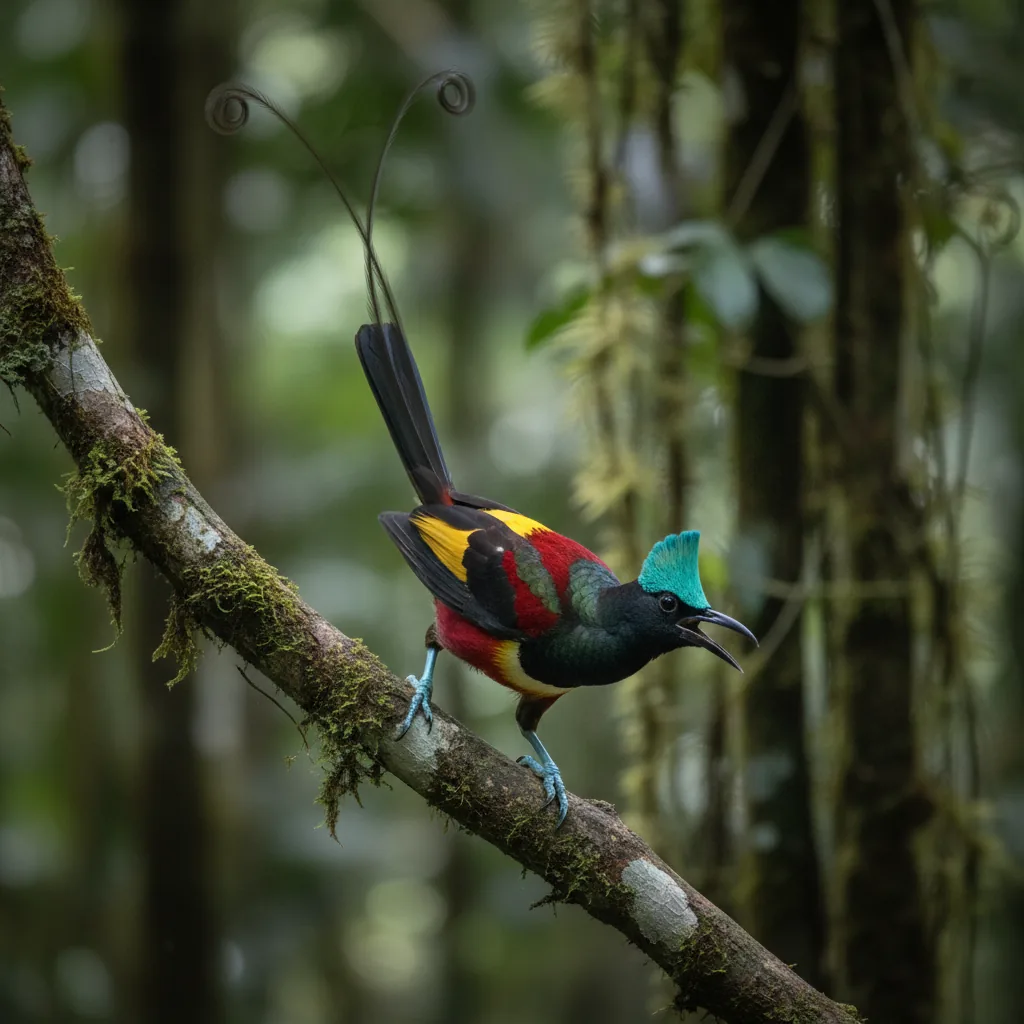
The Red Bird of Paradise (Paradisaea rubra) is one of Papua’s most breathtaking endemic birds — a creature so extraordinary it was once believed to have no legs, floating eternally in paradise. Found exclusively in lowland rainforests of the Waigeo and Batanta islands of West Papua’s Raja Ampat Archipelago, this species represents the pinnacle of avian evolution’s most extravagant experiment: pure, unrestrained beauty designed to impress.
The Spectacular Display
The male Red Bird of Paradise is an explosion of colour that stops even seasoned ornithologists in their tracks. His crimson and yellow plumage, elongated twin wire-like tail feathers, and emerald-green throat patch create a spectacle unlike anything else in the natural world. During the mating season, males congregate at traditional display trees — called leks — where they perform a mesmerising courtship dance, spreading their crimson flank plumes into a vibrant fan while calling loudly to attract females.
Behaviour & Biology
The female, while appearing plain by comparison in her brown-and-white plumage, is actually a master of evolutionary strategy. By choosing only the most vigorously displaying males, she drives the species toward ever more extraordinary male ornamentation — a process biologists call runaway sexual selection. This is why the Red Bird of Paradise has evolved such an impossibly beautiful appearance over millions of years.
Where & How to See Red Bird of Paradise in Papua
Waigeo Island, the primary stronghold of the Red Bird of Paradise, requires a boat journey from Sorong city in West Papua. The best viewing sites are in undisturbed lowland rainforest near established lek sites that local communities have traditionally protected. Dawn — typically between 5:30 and 8:00 AM — offers the best display activity as males perform energetically in the cool morning light.
Photography Tips for Bird of Paradise
Photographing the Red Bird of Paradise requires patience, preparation, and the right equipment. We recommend arriving at lek sites at least 30 minutes before first light to allow the forest to settle before birds begin arriving. Avoid sudden movements, keep voices to a whisper, and dress in dark, neutral colours. A telephoto lens of 400-600mm is ideal for frame-filling shots; image stabilisation is essential in the low forest light. Our photography-focused tours include custom hide setups at active lek sites, allowing extended close-range sessions that produce magazine-quality imagery.
Camera settings to start with: ISO 800-3200 (adjust for light conditions), aperture f/4-f/5.6 (balance depth of field and light), shutter speed 1/250s minimum for freezing display movement. Shoot in RAW format for maximum post-processing flexibility. Our guides can advise on optimal settings for each specific location and time of day.
Conservation Status & Threats
Like all birds of paradise, the Red Bird of Paradise faces mounting pressure from deforestation and habitat degradation. While the IUCN currently lists many species as Least Concern, population trends are downward in areas experiencing forest clearance for agriculture, logging, and palm oil development. Traditional hunting for feather headdresses, while greatly reduced since international protection in the 1920s, continues in some communities for ceremonial use.
Sustainable ecotourism represents one of the most powerful conservation tools available today. When local communities receive genuine economic benefit from living birds watched by tourists, they become the most effective guardians of both forest and wildlife. Every tour booked with Papua Bird of Paradise directly supports community ranger programmes, forest patrol activities, and local conservation education initiatives.
Our Bird Watching Tour Options
We offer a range of bird watching experiences tailored to different interests, timeframes, and fitness levels. Short 3-4 day introductory packages focus on one or two species at accessible lowland sites. Week-long comprehensive tours cover multiple habitats and species. Photography expeditions of 10-14 days include custom hides, multiple lek visits, and professional photography guidance from our specialist naturalist guides.
All our tours include: expert ornithologist-naturalist guide with 10+ years Papua field experience, community ranger accompaniment at lek sites, all local transport (chartered boat, 4WD, porter support), meals and accommodation (ranging from village homestays to luxury jungle lodges), all park and community entry fees, and 24/7 support via WhatsApp. Contact us at [email protected] or WhatsApp +628113809193 to discuss a custom itinerary.
Frequently Asked Questions
How rare is the Red Bird of Paradise?
The Red Bird of Paradise has a restricted range limited to a few islands in Raja Ampat. While still locally common in protected areas, habitat loss is reducing populations, leading to its Near Threatened classification. It remains one of the most sought-after birds for wildlife photographers globally.
Can I see Red Birds of Paradise on a Raja Ampat liveaboard?
Yes! We combine Raja Ampat liveaboard diving trips with early morning bird watching excursions on Waigeo Island, allowing you to experience both the world’s best reefs and Papua’s iconic birds in one expedition.
What time of year is best for seeing the Red Bird of Paradise?
The dry season from May to October offers the best conditions for bird watching in Raja Ampat, with stable weather and active display behaviour. The mating season peaks from June to September.
How long is the hike to see them?
Our guided walks to Red Bird of Paradise lek sites typically take 30-60 minutes through rainforest. The trails are well-maintained and suitable for moderately fit travellers. We begin before dawn and reach the viewing area as light begins to filter through the forest canopy.
Do I need special permits to visit?
Yes, visiting the Raja Ampat islands requires a Marine Park Entry Permit. Our tour packages include all necessary permits, boat transfers, and professional naturalist guides with deep local knowledge.
Ready to See Birds of Paradise in the Wild?
Let our expert naturalist guides take you deep into Papua’s rainforests for a life-changing wildlife encounter. All tours include expert ornithologist guide, chartered boat, meals, and full logistics support.