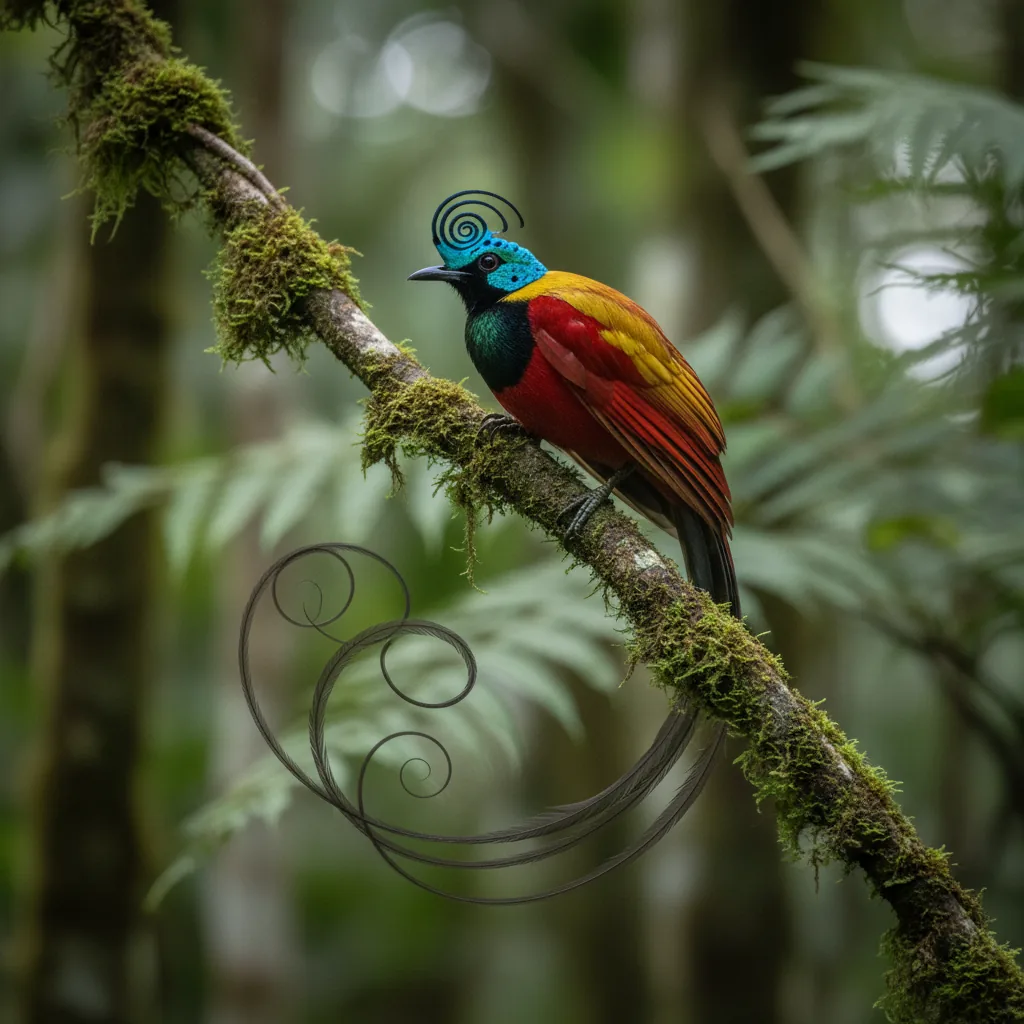
The Last Paradise on Earth for Bird Watchers
Papua â encompassing the Indonesian provinces of West Papua and Papua â harbours the most extraordinary concentration of biodiversity on the planet. Within its ancient rainforests and coastal archipelagos lives the bird that has captivated explorers, scientists, and naturalists for five centuries: the Bird of Paradise (Paradisaeidae).
Of the world’s 42 recognised Bird of Paradise species, 39 are endemic to New Guinea and its surrounding islands. Papua’s Raja Ampat archipelago alone hosts several species found nowhere else on Earth, including the globally iconic Wilson’s Bird of Paradise (Cicinnurus respublica) on Waigeo Island, whose cobalt-blue bare crown and twin spiral tail feathers make it the most sought-after birdwatching target in Southeast Asia.
These birds did not evolve their spectacular plumage merely for human admiration. In the absence of large predators in Papua’s deep forests, male Birds of Paradise invested millions of years of evolution into elaborate ornamental displays rather than camouflage or flight speed. The result is the most visually complex mating behaviour in the animal kingdom â a living testament to the power of sexual selection, first described by Alfred Russel Wallace in 1858.
At Papua Bird of Paradise, we have spent over a decade building relationships with local Papuan guides and landowners to create ethical, community-supported birdwatching expeditions. Our dawn watches at purpose-built hides on Waigeo, Batanta, and Salawati islands deliver near-guaranteed sightings of displaying males â an experience our guests consistently describe as one of the most profound encounters with wild nature they have ever had.